
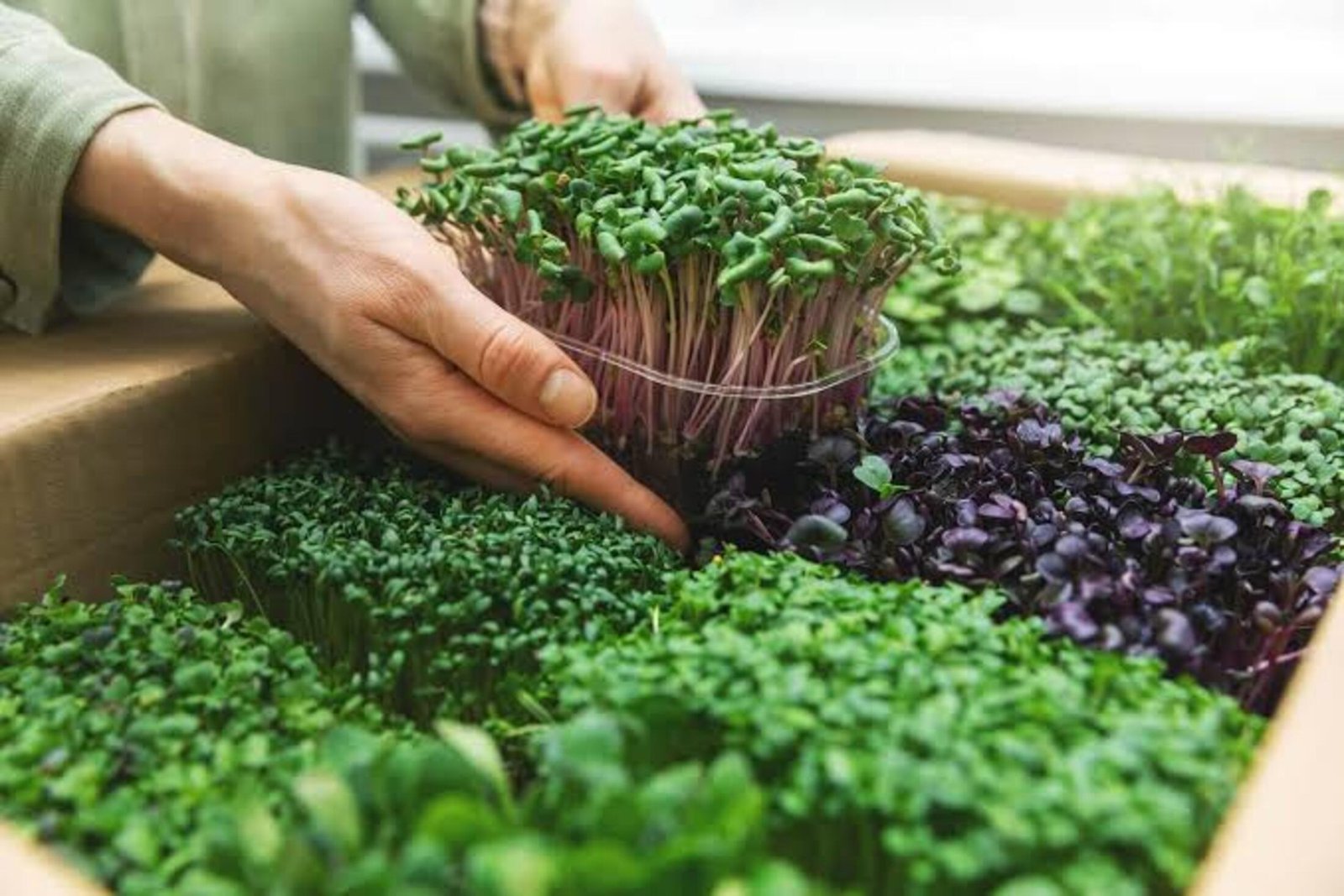
Now that microgreens is a popular trend, you might be wondering what exactly a microgreen is.
So, in this article, I’ll explain everything you need to know about microgreens, as well as why they’re so popular.
What they taste like, the nutritional benefits they provide, and how to include them into your daily routine.
These flavorful greens, sometimes known as micro herbs or vegetable , give a vibrant splash of colour to a number of recipes.
Despite their small size, they are nutritionally packed, frequently containing more nutrients than mature vegetable greens. As a result, they’re an excellent addition to any diet.
Microgreens are classified somewhere between a group and a baby veggies, which implies they may deliver essential nutrients in a practical manner. They’re referred to as a superfood by some.
Mustard and cress have long been cultivated on kitchen window ledges and in classrooms. They’re enjoyable to raise, delicious to eat, and nutritious. Other varieties of sprouts and microgreens, on the other hand, have recently gained popularity as healthy foods.
Now the question arises what microgreen actually is?
Why people in love with microgreens
Vegetable and herb seedlings are known as microgreens. They are a new sort of specialty vegetable that can be purchased in stores or grown at home from vegetable, herb, or grain seeds. There are several wild species among them.
Microgreens, like sprouts, are a young vegetable. Sprouts and microgreens, on the other hand, are not the same thing.
Sprouts are newly germinated seeds harvested just as the seed starts to expand and before the leaves appear. Microgreen, on the other hand, are sprouts that have leaves attached to them.
The plant becomes a microgreen after the cotyledon leaves — the embryonic leaves have fully matured and the first genuine leaves have sprouted.
Sprouts are frequently grown in water and harvested within them.
Microgreen can be grown in the soil or in a hydroponic system, but they require sunlight to thrive. Depending on the type, they are harvested within 1–3 weeks.
Microgreen can be made from any plant or vegetable. The taste will be determined by the plant.
Microgreens health benefits
Apart from being a popular garnish in various cuisines, tiny microgreens are also extremely healthful and should be consumed on a daily basis as part of a balanced diet. Let’s take a look at some of their most obvious health advantages.
- Microgreen are high in minerals including vitamin K and fibre, which help control blood pressure and lower the risk of heart attack.
- Microgreen can also aid in the reduction of inflammation in the body because they are completely free from chemicals.
- Microgreen have also been shown to lessen the risk of cancer in people who eat a healthy diet.
- Microgreen are a fantastic source of daily nutritional requirements because they are easy to cultivate at home with few materials.
- Beta-carotenes are abundant in most microgreen, which aid in the prevention of eye illnesses and diabetes.
How to Include Microgreens in Your Diet
- Microgreen can be eaten in a number of different ways.
- Sandwiches, wraps, and salads are just a few examples of what they can be used for.
- Microgreen can also be juiced or blended with other ingredients to make smoothies. Wheatgrass juice is a well-known example of a juiced microgreen.
- You may also use them to garnish pizzas, soups, omelettes, curries, and other warm foods.
Summary
Microgreens have a pleasant flavour and can be readily introduced into your diet.
They’re also generally quite nutritious, and they may even help you avoid catching some diseases.
Because they’re easy to grow at home, they’re a particularly cost-effective way to boost nutrient intake without having to buy large quantities of vegetables.
Growing microgreens can be a practical and cost-effective approach to put fresh food on the table in terms of cost and sustainability. They’re an excellent complement to your diet.
