
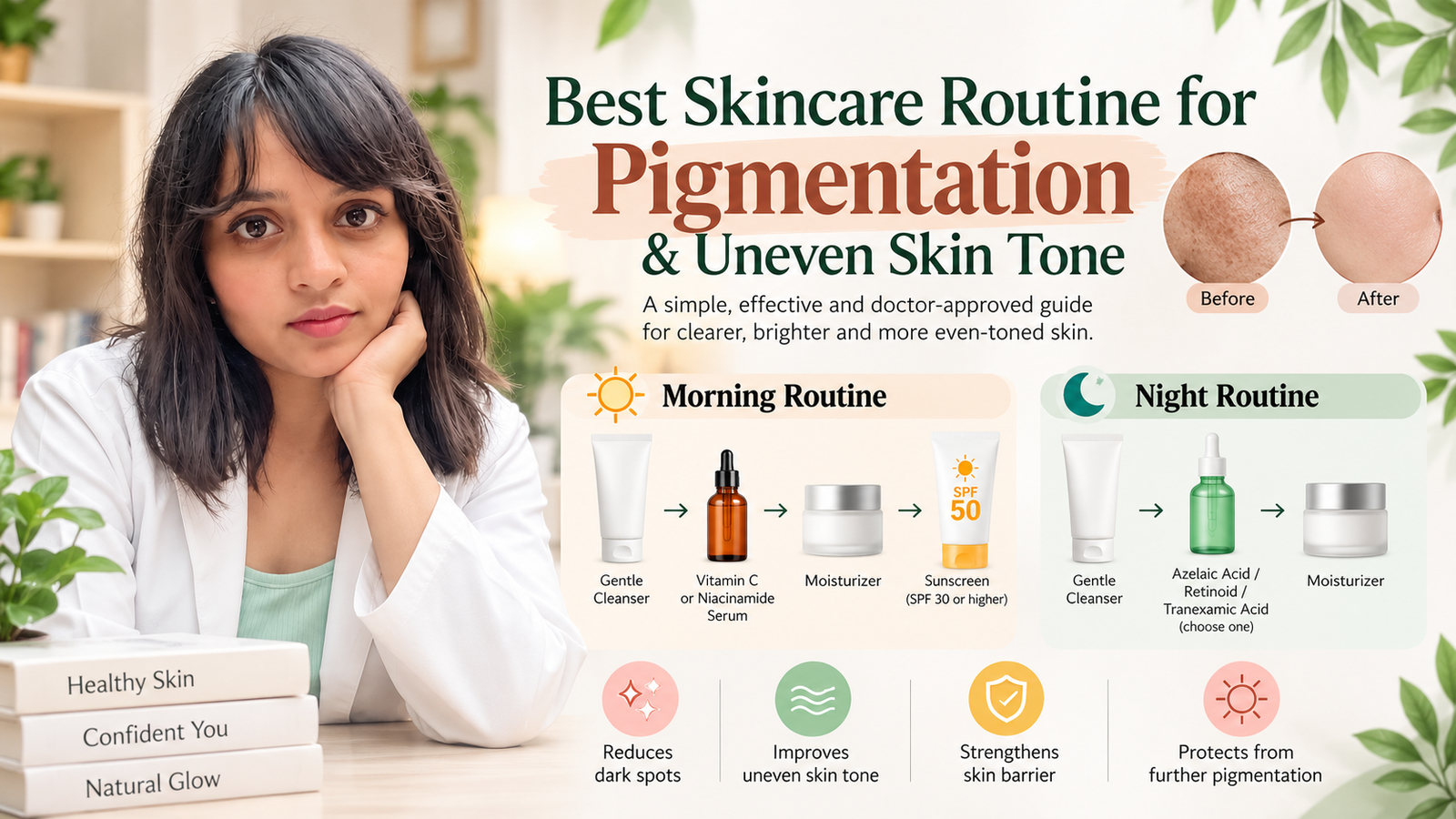
Uneven skin tone and pigmentation are among the most common skin concerns, especially in people with darker or Indian skin tones. Dark spots may develop after acne, excessive sun exposure, hormonal changes, inflammation, or certain skin conditions.
The good news is that pigmentation can often be improved with a consistent skincare routine. However, the key is not using as many products as possible. A simple routine with the right ingredients, regular sunscreen use, and patience usually works better than constantly changing products.
In this guide, we’ll discuss a practical skincare routine for pigmentation and uneven skin tone and explain which ingredients can actually help.
What Causes Pigmentation?
Pigmentation occurs when the skin produces excess melanin. Some common causes include:
- Sun and UV exposure
- Acne and post-acne inflammation
- Hormonal changes
- Melasma
- Skin irritation or injury
- Picking or squeezing pimples
- Certain medications or medical conditions
- Excessive use of irritating skincare products
One important point: not all pigmentation is the same. Dark spots left after acne require a different approach from melasma or pigmentation caused by an underlying condition.
Morning Skincare Routine for Pigmentation
1. Gentle Cleanser
Start your morning with a mild cleanser
If you have oily or acne-prone skin, you can choose a gentle foaming cleanser. If your skin is dry or sensitive, a low-foaming or creamy cleanser may be more comfortable.
Avoid harsh scrubbing. Physical irritation can worsen inflammation and pigmentation.
2. Antioxidant or Brightening Serum
You don’t need multiple serums. Choose one targeted ingredient based on your skin type and concern.
Common options include:
Vitamin C: Helps provide antioxidant protection and may help improve uneven pigmentation over time.
Niacinamide: Can help support the skin barrier and reduce the appearance of uneven skin tone.
Azelaic acid: Particularly useful when pigmentation is associated with acne or inflammation.
Start with one active rather than layering several strong products together.
3. Moisturizer
Use a moisturizer appropriate for your skin type.
Look for ingredients such as:
- Ceramides
- Glycerin
- Hyaluronic acid
- Panthenol
A healthy skin barrier is important because irritated skin can become more pigmented.
4. Sunscreen — The Most Important Step
If you are treating pigmentation but skipping sunscreen, you’re making the process much harder.
Use a broad-spectrum sunscreen with SPF 30 or higher every morning. Apply enough to adequately cover the face, neck and other exposed areas.
Reapply when you are outdoors for prolonged periods, particularly after sweating or swimming.
For people prone to melasma or pigmentation, tinted sunscreens containing iron oxides may provide additional protection against visible light, which can contribute to pigmentation in some individuals.
Night Skincare Routine for Pigmentation
1. Cleanse Your Skin
Remove sunscreen, makeup, sweat and dirt with a gentle cleanser.
If you wear heavy or water-resistant sunscreen or makeup, you may need an appropriate first cleansing step before your regular cleanser.
2. Choose One Pigmentation-Focused Active
This is where many people make a mistake.
Using vitamin C, retinol, exfoliating acids, alpha arbutin, kojic acid and several other actives together does not automatically produce faster results. It can instead cause irritation, which may make pigmentation worse.
Depending on your skin and the cause of pigmentation, ingredients commonly used include:
Azelaic acid: Useful for acne-prone skin and post-inflammatory pigmentation.
Retinoids: Can improve skin cell turnover and are commonly used for acne and pigmentation. They should be introduced gradually because irritation is possible.
Tranexamic acid: A topical option that may be useful for certain types of hyperpigmentation, particularly when used as part of a broader treatment plan.
Alpha arbutin: Often used in cosmetic formulations aimed at reducing the appearance of dark spots.
Kojic acid: Can help reduce melanin production but may irritate sensitive skin in some people.
The right ingredient depends on why you have pigmentation, not simply how dark the spots look.
3. Moisturizer
Finish with a moisturizer to maintain the skin barrier and reduce dryness or irritation.
A Simple Routine You Can Actually Follow
If you want to keep things simple:
Morning
Cleanser → Brightening serum → Moisturizer → Sunscreen
Night
Cleanser → One targeted active → Moisturizer
You do not need a 10-step skincare routine to improve pigmentation.
How Long Does It Take to See Results?
Pigmentation rarely disappears within a few days.
Depending on the cause, depth and severity of pigmentation, improvement may take several weeks to several months.
Consistency matters more than constantly changing products.
Take photographs in similar lighting every few weeks rather than checking your skin in the mirror every day. This makes gradual improvement easier to recognize.
Common Mistakes That Can Make Pigmentation Worse
Using Too Many Active Ingredients
Combining multiple exfoliating acids and strong actives can irritate your skin.
Skipping Sunscreen
UV and visible light exposure can worsen certain forms of pigmentation.
Scrubbing Dark Spots
Scrubbing does not “remove” pigmentation. Repeated irritation can actually increase inflammation.
Picking Pimples
Squeezing acne increases inflammation and can leave persistent post-inflammatory pigmentation.
Changing Products Too Frequently
Give an appropriate skincare routine enough time to work before deciding that it has failed.
Using Unregulated Bleaching Products
Avoid unknown fairness or bleaching creams, especially products containing undeclared steroids, mercury or other potentially harmful ingredients.
When Should You See a Dermatologist?
Not every pigmentation problem should be treated with over-the-counter skincare.
Consult a dermatologist if:
- Pigmentation is spreading or rapidly changing
- You have persistent melasma
- Dark patches are symmetrical on the cheeks, forehead or upper lip
- Pigmentation is associated with significant acne
- You have severe or persistent skin irritation
- Over-the-counter products have not helped
- You suspect pigmentation may be related to a medication or medical condition
A dermatologist can determine whether you have post-inflammatory hyperpigmentation, melasma, acne-related pigmentation or another condition and select treatment accordingly.
Final Takeaway
The best skincare routine for pigmentation is not necessarily the most complicated one.
A practical approach is:
Gentle cleansing + one appropriate pigmentation-fighting active + moisturizer + consistent sunscreen.
Most importantly, identify the cause of pigmentation first. Acne marks, melasma and other forms of hyperpigmentation may require different treatment approaches.
Be consistent, avoid unnecessary irritation, protect your skin from the sun, and give your routine enough time to work.
Frequently Asked Questions
Can pigmentation be completely removed?
Some types of pigmentation can improve significantly, but results depend on the underlying cause, duration and depth of pigmentation. Some conditions, such as melasma, may require long-term maintenance.
Which is better for pigmentation: vitamin C or niacinamide?
Neither is universally “better.” Both can be useful, but the choice depends on your skin type, tolerance and the cause of pigmentation.
Can sunscreen alone remove pigmentation?
Sunscreen does not directly remove existing pigmentation, but consistent photoprotection is essential because UV and visible-light exposure can worsen pigmentation and interfere with treatment.
Is exfoliation necessary for pigmentation?
No. Exfoliation can be useful for some people, but it is not essential. Excessive exfoliation can irritate the skin and potentially worsen pigmentation.
Can I use multiple pigmentation serums together?
You can sometimes combine compatible ingredients, but more products do not necessarily mean faster results. If your skin becomes irritated, simplify your routine.
