
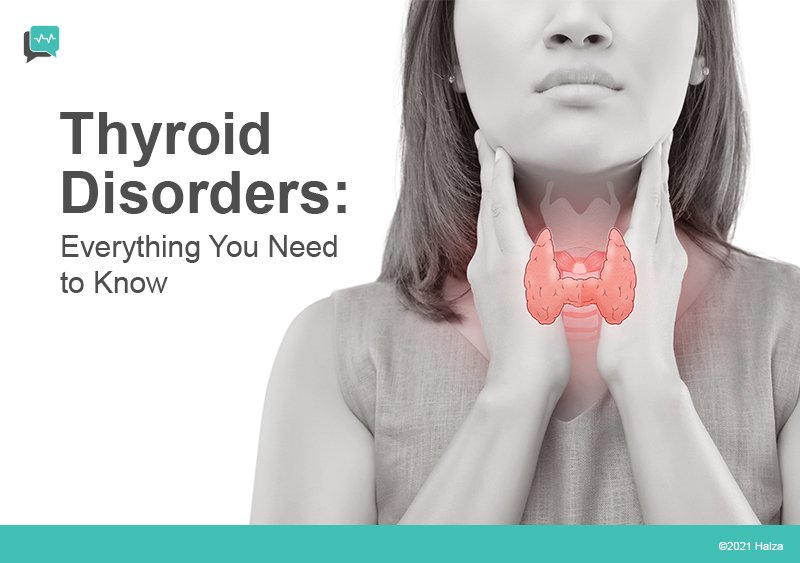
A thyroid disorder is a condition that affects your thyroid gland. The thyroid is an h-shaped or butterfly-shaped gland situated in front of the neck. The thyroid gland regulates most of the metabolic processes in the body. Metabolism is a process where you take food and convert it into energy. This energy is used to control most activities of the body.
Numerous types of conditions affect thyroid gland functions and secretions.
The thyroid uses iodine to produce its essential hormones. Thyroxine (t3) is the primary hormone that the gland produces. After going to the blood, a small portion of thyroxine converts into triiodothyronine (t3). Which are the most active hormones.
The function and regulation of the thyroid hormone are controlled by the feedback mechanism of the brain. When the level of the thyroid gland is low in the blood, the hypothalamus produces thyrotropin-releasing hormone (TRH), which acts on the pituitary to stimulate secretion.
Given the information that the secretion and regulation of the thyroid are controlled by the hypothalamus and pituitary gland, disorders of these vital organs can also affect the thyroid gland.
Thyroid disorder symptoms
There are a lot of thyroid symptoms that you experience in your daily life. But this symptom is sometimes similar to other diseases and this makes it’s hard to find symptoms related to thyroid problems or other problems.
The symptoms of the thyroid are divided into two groups because the process of the thyroid is only affected when its secretions are low (hypothyroidism) or high (hyperthyroid).
When the secretion of the thyroid is high (hyperthyroid),
- Experiencing anxiety, irritability, and nervousness.
- Having trouble sleeping.
- Experiencing irregular menstrual periods or having your menstrual cycle stop
- Losing weight.
- Having vision problems or eye irritation
- Having an enlarged thyroid gland or a goiter.
- Having muscle weakness and tremors.
- Feeling sensitive to heat.
https://youtube.com/shorts/QsZXoSjid_o?feature=share
When the secretion is low (hypothyroidism),
- Feeling tired (fatigue).
- Gaining weight.
- Experiencing forgetfulness.
- Having frequent and heavy menstrual periods.
- Having dry and coarse hair.
- Having a hoarse voice.
- Experiencing an intolerance to cold temperatures.
Thyroid disorder symptoms in females
- Feeling cold when other people do not.
- constipation
- Muscle weakness.
- Weight gain, even though you are not eating more food.
- Joint or muscle pain.
- Feeling sad or depressed.
- Feeling very tired.
- Pale, dry skin.
- Menstrual irregularity
Thyroid symptoms in male
- Fatigue
- Increased sensitivity to cold.
- Dry skin.
- Weight gain.
- Puffy face.
- hoarseness.
- Muscle weakness.
Thyroid test
There are plenty of tests that will diagnose your thyroid test correctly because, by looking at the patient’s symptoms, it is hard to tell whether you are suffering from thyroid problems or other problems.
Types of the thyroid test
Blood test
one of the best ways to diagnose the thyroid issue. This test will diagnose your thyroid level in the blood and be used to detect and see
Hyperthyroidism
Hypothyroidism
This thyroid value helps to find if you have
Grave’s diseases
Goiter
Thyroid cancer
Thyroid nodules
Thyroiditis
Imaging test
by scanning the thyroid hormone, your examiner can learn lots of information about thyroid hormones. This allows your examiner to check for an increase in the size of the thyroid, nodule shape, and size.
Your doctor scans your thyroid gland by using ultrasound. This is a diagnostic procedure that produces high ultrasound waves, inaudible to the ears. The echoes are recorded and transformed into pictures or videos. Ultrasound is used to detect many problems of the body and it’s not like x-rays.
During this test, you will lie on a flat, nonpadded examination table for about 20–30 minutes.
Physical examination
where your doctor checks your thyroid disorder by feeling your neck for any growth or enlargement of the thyroid. It is a simple and painless procedure.
Treatment of thyroid
Drugs and surgery are the best way to adjust hormone levels.
Drugs for thyroid disorders
In the case of hypothyroidism
Drugs are given to replace the missing thyroid hormones. Synthetic thyroid hormones levothyroxine (Levoxyl, Synthroid) are given in form of pills.
In the case of hyperthyroidism
Drugs can be given to decrease the production of thyroid hormones methimazole (Tapazole) and propylthiouracil. Is used to give inpatient treatment of hyperthyroidism.
Thyroid surgery
Surgery can be performed to remove a large goiter or nodules within the thyroid gland. If there is the possibility of thyroid cancer, the gland will be removed entirely, and the individual will need to take synthetic thyroid hormones throughout their entire lifetime. Potential major thyroidectomy surgery is risky in a patient who is old.
Diet and exercise for thyroid
Diet
Protein, calcium, magnesium, and iodine help your thyroid work. Just make sure you’re getting ample amounts of all the B vitamins, vitamin A, and Vitamin c.
If you don’t have enough iodine in your system, taking selenium can cause hypothyroidism.
List of Food to avoid in thyroid
- Millet: all varieties
- Highly processed foods: hot dogs, cakes, cookies, etc.
- Supplements: Adequate intakes of selenium and iodine are essential for thyroid health, but getting too much of either may cause harm.
- Soy-based foods: tofu, tempeh, edamame beans, soy milk, etc.
- Certain fruits: peaches, pears, and strawberries
- Beverages: coffee, green tea, and alcohol
People with hypothyroidism should avoid millet, processed foods, and supplements like selenium and zinc.
Also, avoid these products:
- Psudoepeneprine (found in over-the-counter cold remedies) can cause nervousness, insomnia, and high blood pressure.
- Alkaloids, including caffeine, morphine, and quinine, can raise your blood pressure and heart rate.
Exercises for thyroid control
- Walking
- Strength training
- Bike riding or indoor cycling
- Elliptical training
- Stair climbing
- Yoga
- Tai Chi
- Hiking on easy terrain
- Water aerobics
- Dancing
- Swimming
- Jumping rope
- Jogging or running
- Jumping jacks
- High-intensity interval training
- Hill climbing
- Cross-country skiing
- Stair climbing
Closing in
Eating the right food and taking medication on time may help you reduce the symptoms and improve thyroid function.
Following a proper routine exercise for the thyroid can help you manage your weight.
