
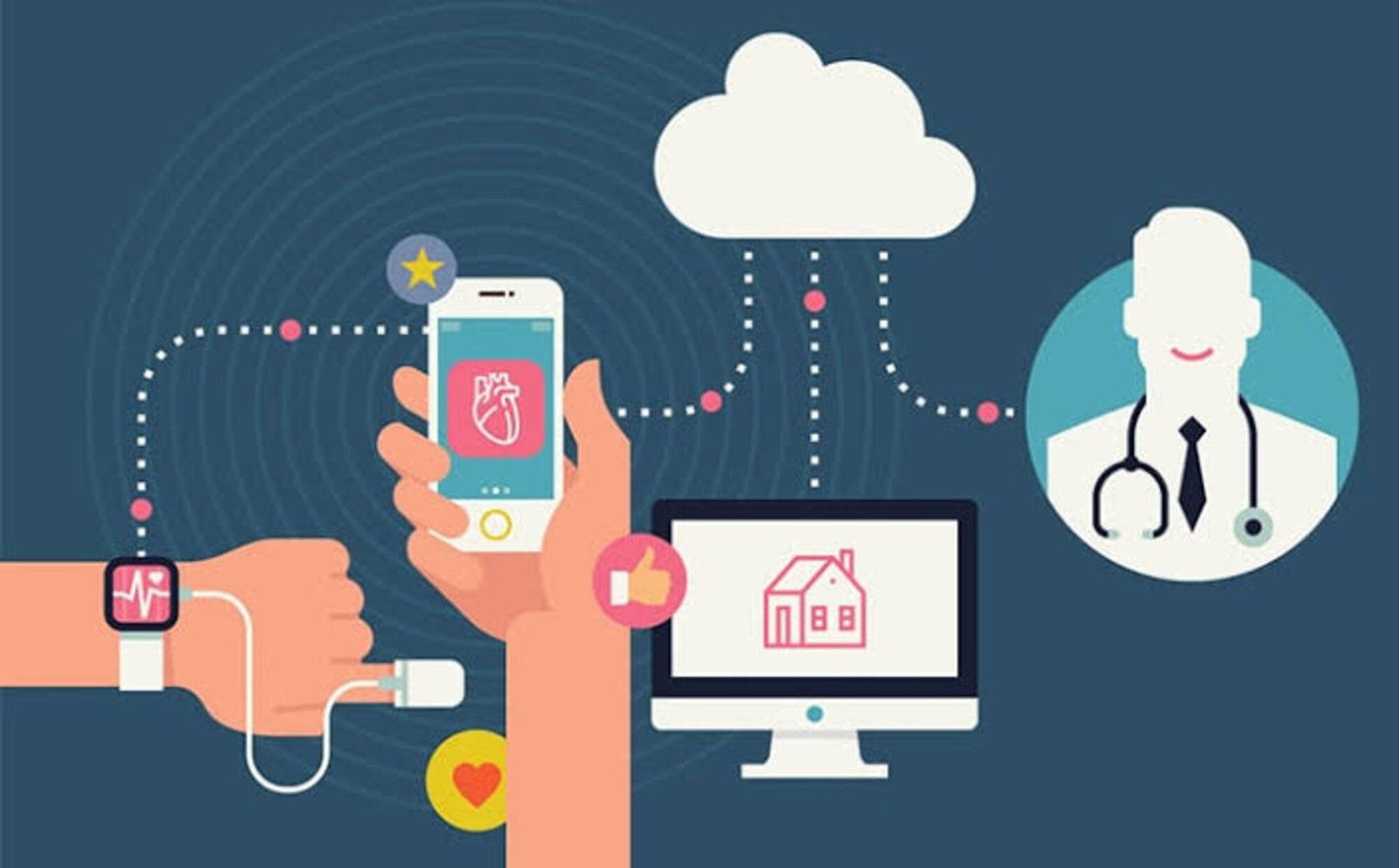
Prior to the introduction of IoT in healthcare, there was a lot of paper work and patient connection with doctors was limited since every time a patient went to the doctor, he or she appeared new to the doctor because the doctor had entered his data on paper.
There was no way for people to communicate with doctors on a regular or weekly basis so that doctors could make suitable recommendations.
Iot provides remote control in the healthcare business, allowing people to stay safe and healthy.
The use of IoT allows for a simple connection between the patient and the doctor. Patient participation and satisfaction have increased as a result. The internet of things has a significant impact on minimizing healthcare costs and improving clinical outcomes.
By using Iot helps in data analytics and smart healthcare to improve by allowing healthcare practitioners to be more vigilant and connected via IOT sensors, communication, and storage.
The rise of healthcare-specific internet of things goods opens up plenty of possibilities, and the massive volumes of data created by linked devices has the potential to modify healthcare.
The ability of the IOT in healthcare to connect to data and record vast volumes of data, especially sensitive information, raises concerns about data security
Iot in healthcare
IoT devices open up a slew of new possibilities for healthcare providers to keep track of patients, as well as for patients to keep track of themselves.
Connectivity, advanced computer server connection, information exchange, and data transfer are all enabled by IoT in healthcare, making healthcare service delivery more effective.
Patients who are not physically present in a healthcare facility can have their health indicators like heart rate, blood pressure, temperature, and more collected automatically using remote patient monitoring. When an IoT device captures patient data, it sends it to a software application where it may be seen by healthcare professionals and/or patients. And, based on the patient’s health data, the health care professional prescribes the appropriate treatment.
While wearable devices like the ones mentioned above are still the most popular type of IoT device in healthcare, there are those that go beyond monitoring and actually provide treatment.
Future of IoT in healthcare
With greater broad band speeds, improved analysis tools, 5G connectivity and IoT technology, and increased acceptance of healthcare IT software, the future looks bright.
In the coming years, plenty of new healthcare goods will be developed, including an intelligent home video system for following senior citizens at home, as well as smart speakers.
Right now We don’t have enough devices to monitor a patient’s vital signs and a variety of health-care data points.
However, until 2030, iot firms will produce more technologies for the healthcare sector that will help patients monitor their vital signs effectively. It will make health care more affordable and efficient in the future. It can aid in the development of more individualised and patient-centered equipment. As a result, it appears that it is past time to rise above the hurdles and go on a path to connect healthcare devices.
Healthcare app development company & mobile application app
Following the introduction of mobile applications, healthcare apps have become quite popular. Health care development firms are in high demand right now since they can help patients at home without going to hospital.
Due to streamlined visit scheduling, patient evaluation, and treatment, mobile healthcare apps save patients and doctors time and increase care quality.
Mobile health technology often known as mHealth, is quickly becoming the preferred method for patients to contact their doctors, log onto patient portals, count their steps and glucose levels, initiate a telehealth visit, and manage their meds and diseases. Patients are considerably more likely to cooperate when physicians and other professionals “prescribe” mHealth apps as part of their treatment and care because they drove the transition to mHealth apps and platforms.
There are numerous mobile healthcare apps available on the market; it is up to you to decide which app to use.
Benifits of IoT in healthcare
Iot is quite popular all around the world, especially in the field of health care. Remote monitoring, cost reduction in healthcare, and access to medical data are some of the primary advantages of IoT in the healthcare sector.
Remote monitoring:-Remote monitoring is the use of information tools to monitor and gather medical and other health data from patients and send this information to a healthcare provider for evaluation.
Reduction of healthcare cost:-Smart technologies can streamline claims processing, reduce costs by a significant percentage, and minimise employee costs. The technology can facilitate data collecting and transmission, resulting in decreased healthcare costs and improved consumer experiences.
Medical information is easily accessible.– It provides accurate medical records, allowing patients to obtain high-quality care while also assisting healthcare providers in making the best medical decisions and avoiding issues.
Improved treatment management: IoT devices aid in the tracking of drug delivery and treatment response, as well as the reduction of medical errors.
Improved healthcare management: By utilising IoT devices, healthcare authorities can obtain vital information regarding equipment and staff efficacy, which they can then use to make recommendations for improvements.
Research: Because IoT devices can gather and analyse large amounts of data, they have a great deal of potential for medical research.
Challenges of IoT in healthcare
In terms of healthcare, IoT is quite beneficial. However, we can’t overlook the fact that we’re up against some significant issues. Machine failure: Sensor and connected equipment performance can be impacted by failures, bugs in data, or power failures, putting health care operations at risk.
Security: Health-care monitoring equipment have a lot of data that can be hijacked by hackers and reveal sensitive information about a patient’s health, which is a big fear that keeps people from adopting technology for medical purposes.
Cost increase: While everyone understands that IoT promises to lower healthcare costs in the long run, the cost of deployment in hospitals and staff training is pretty huge.
Integration: Because there is no clarity on IoT protocols and standards, gadgets from different manufacturers may not be compatible. The lack of consistency hinders IoT from being fully integrated, limiting its potential usefulness.
