
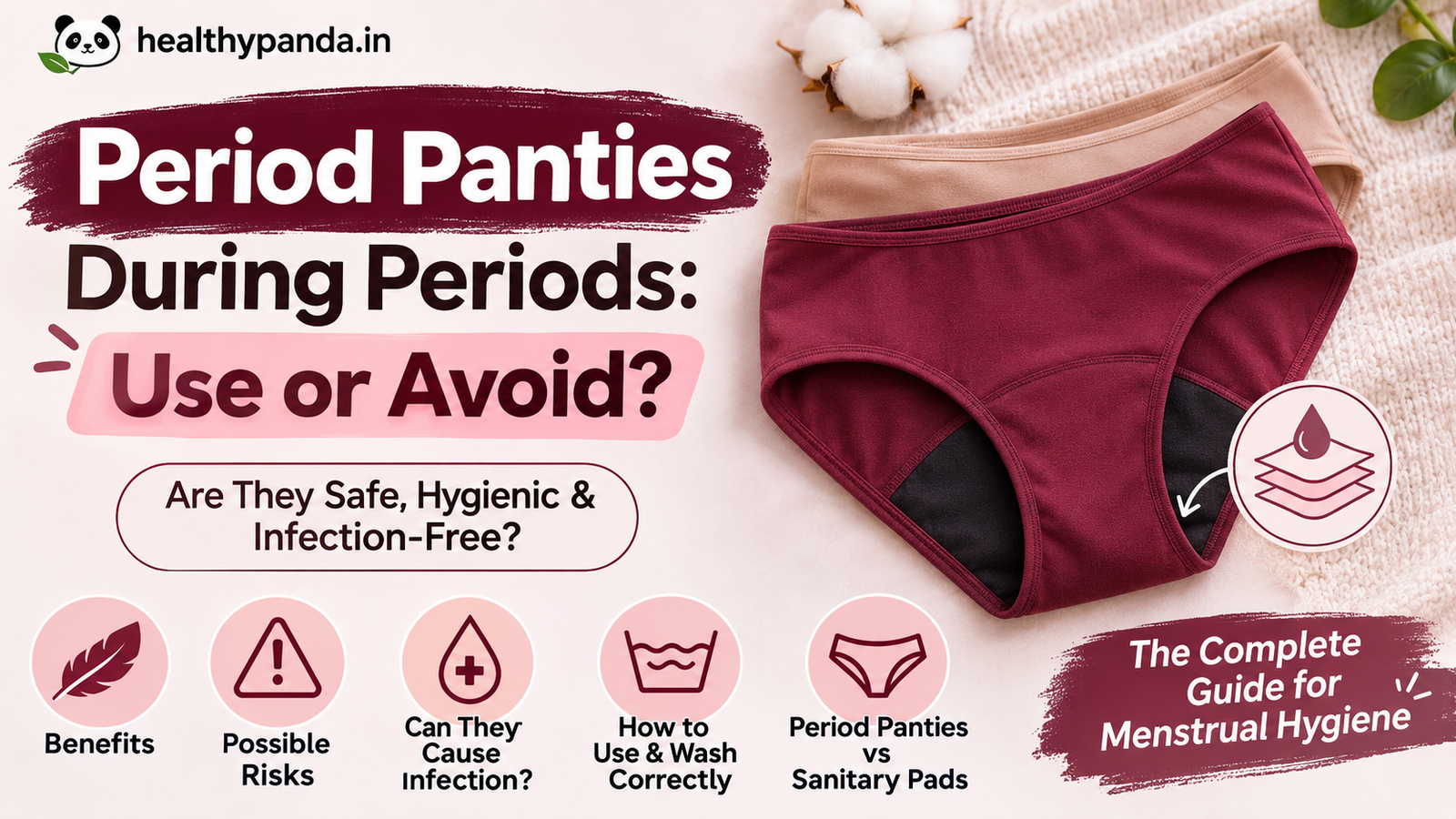
Are period panties safe to wear during periods? Period underwear is becoming increasingly popular as an alternative to sanitary pads and tampons. But many women still wonder whether these panties are hygienic, whether they can cause vaginal infections, and whether wearing them for long hours is safe.
Let’s understand the benefits, risks and correct way to use period panties.
What Are Period Panties?
Period panties, also known as menstrual underwear, are specially designed underwear with multiple layers of absorbent fabric.
These layers generally:
- Absorb menstrual blood.
- Help prevent leakage.
- Keep moisture away from the skin.
- Provide additional protection against staining.
Unlike regular underwear, period panties can absorb menstrual flow without requiring a separate sanitary pad.
Are Period Panties Safe to Use?
Yes! Period panties are generally safe when used correctly and washed properly.
They are an external menstrual product, meaning they do not enter the vagina. You can use them as an alternative to sanitary pads or alongside another menstrual product for additional protection.
However, wearing any menstrual product for too long, especially when it becomes saturated or uncomfortable, is not recommended.
Benefits of Using Period Panties
1. Comfortable Alternative to Sanitary Pads
Some women find period panties more comfortable because they do not have adhesive wings or a separate pad that can shift.
2. Reusable and Environment-Friendly
Most period panties are washable and reusable, reducing the amount of disposable menstrual waste.
3. Leakage Protection
Their absorbent and leak-resistant layers can help prevent menstrual blood from staining clothes.
4. Useful During Night-Time
Period panties can provide additional protection while sleeping, depending on their absorbency and your menstrual flow.
5. Useful for Light and Moderate Flow
They can be convenient during lighter menstrual days and as backup protection during heavier days.
Possible Disadvantages of Period Panties
Period panties are not perfect for everyone.
1. Moisture and Discomfort
If the underwear becomes saturated or remains wet for too long, it may cause discomfort, skin irritation or a rash.
2. Improper Washing
Poor washing, incomplete rinsing or storing underwear while damp can compromise hygiene.
3. Skin Sensitivity
Some fabrics, dyes or antimicrobial treatments may irritate sensitive vulvar skin.
4. Not Always Suitable for Heavy Flow
Some products may not provide enough absorbency for women with heavy menstrual bleeding.
5. Initial Cost
Good-quality period underwear can be more expensive initially than disposable sanitary pads.
Can Period Panties Cause Vaginal Infections?
This is one of the most frequently asked questions.
There is no strong evidence that properly used period panties automatically cause vaginal infections.
However, poor menstrual hygiene can contribute to irritation and may increase the risk of problems.
To maintain intimate hygiene:
- Change your period panties when they become saturated, wet or uncomfortable.
- Wash them according to the manufacturer’s instructions.
- Use a mild, fragrance-free detergent.
- Rinse thoroughly.
- Dry them completely before wearing or storing.
- Avoid wearing damp underwear.
- Prefer breathable, comfortable fabrics.
Remember: Your vagina is self-cleaning. You do not need vaginal washes, perfumes or intimate deodorants to maintain vaginal hygiene.
How Often Should You Change Period Panties?
There is no single changing interval suitable for everyone.
It depends on:
- Your menstrual flow.
- The absorbency of the underwear.
- The manufacturer’s instructions.
- Whether the underwear feels wet or uncomfortable.
Change into a fresh pair before it becomes saturated. Carry an extra pair when travelling or spending long hours outside.
Period Panties vs Sanitary Pads: Which Is Better?
| Feature | Period Panties | Sanitary Pads |
|---|---|---|
| Reusable | Yes | No |
| Leakage protection | Yes, depending on absorbency | Yes |
| Initial cost | Higher | Lower |
| Washing required | Yes | No |
| Convenience | Depends on access to changing and washing facilities | Easy to replace |
| Best for | People comfortable with reusable underwear | People preferring disposable products |
Neither option is universally better. Choose according to your comfort, menstrual flow, budget and hygiene preferences.
Who Should Consider Using Period Panties?
Period panties may be a good option for:
- Women who prefer reusable menstrual products.
- Women experiencing discomfort with conventional sanitary pads.
- Women looking for additional overnight protection.
- Women with light or moderate menstrual flow.
- Women who want backup protection with a menstrual cup or tampon.
If you experience persistent itching, burning, unusual discharge or unpleasant odour, consult a gynaecologist instead of assuming your menstrual product is the only cause.
Frequently Asked Questions (FAQs)
Q1. Can I wear period panties throughout the night?
Yes, if the product has sufficient absorbency for your flow and you follow its usage instructions. Change it if it becomes saturated or uncomfortable.
Q2. Can I wear period panties every day?
They are designed for menstrual use. For everyday underwear, regular breathable underwear is generally sufficient.
Q3. Can period panties replace sanitary pads?
Yes. They can replace sanitary pads if their absorbency is appropriate for your menstrual flow.
Q4. Can period panties cause itching?
They may cause irritation in some people due to moisture, friction or sensitivity to fabric and detergent. Stop using them if irritation develops.
Q5. Are period panties suitable for heavy periods?
Some products are designed for heavy flow, but not all. Check the absorbency rating and consider additional protection if needed.
Final Verdict: Should You Use Period Panties or Not?
YES, you can use period panties!
They are a convenient and reusable menstrual hygiene option when chosen carefully and maintained properly.
But remember, no menstrual product is automatically hygienic just because it is reusable or marketed as antibacterial.
The key to menstrual hygiene is choosing the right product, changing it when necessary and maintaining proper cleaning practices.
Your comfort matters, but your intimate hygiene matters too.
Medical disclaimer: This article is for general educational purposes and does not replace individual medical advice.
